
What Is the Difference Between a Retirement Community and Assisted Living?

The cost of independent living is impossible to quantify due to the variety of options.
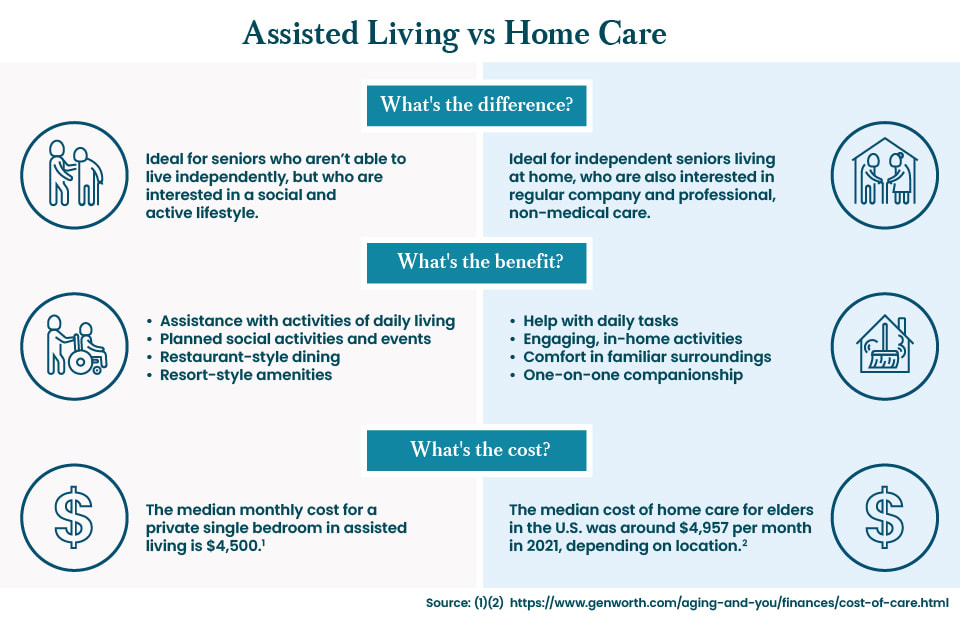 For example, independent living in an assisted living community might be more like a rental situation. You pay monthly and can give 30 days’ notice to end the contract. In a retirement community, the cost of constructing or buying a home will depend upon the area where you live, the size of the home, and added features. Every community will be different. Most continuing care retirement communities are a “buy-in” where you pay a lump sum. According to aarp the average entrance fee is $329,000 but can run as high as a million or more.
If you find yourself in this difficult position, you have options for relieving this stress and giving your loved one the supportive environment they need to thrive. Retirement communities and assisted living facilities offer seniors independence and socialization, ensure they receive the appropriate quality of care and improve their overall quality of life. Getting your loved one the help they truly need keeps them safe and healthy. What’s more, it prevents you from experiencing caregiver burnout that can cause undue anxiety and damage your relationship with your loved one. To secure quality care, you must accept your limitations and foster a respectful, productive discussion with your senior to determine the best plan. https://scholar.google.com/scholar_case?case=14610367661376100908&q=retirement+community&hl=en&as_sdt=6,33
Life plan community. Ccrc. Continuing care retirement community. Buy-in community. These terms all refer to a senior living community that offers independent living plus a continuum of care that typically includes assisted living, skilled nursing, rehabilitation services and memory care. Care is provided at the community, eliminating the need for moves in times of duress. With the upfront investment, a buy-in option may look more expensive. However, the plan for long-term care adds value that’s both tangible and intangible. As a financial benefit, the entrance fee secures lower rates for any care you may need. The discount varies by community.
Options for Elder Adults
Do you want to learn more about the options for long-term residential care? these resources can help you get started:
search the eldercare locator or call 800-677-1116 for help finding care in your area.
Visit longtermcare. Gov for information about housing options for older adults and finding local services. Call your local area agency on aging , local and state offices on aging or social services, or your tribal organization. Use medicare’s care compare tool to find and compare nursing homes and other health care facilities in your state or territory. Check the quality of nursing homes and other health care facilities with the joint commission’s quality check.
Modern retirement has changed as it has advanced. It’s common now for people to be retired for two, three, even four decades. Where you live when you first retire is not necessarily where you will remain as the years progress. What many have begun thinking about is where they will end up. Adult children are also thinking about how to bring the best quality of life to their aging parents. That’s where this article comes in. Let’s talk about the differences between three forms of late-stage retirement options: assisted living communities, nursing homes, and ccrcs (or continuing care retirement communities).
Assisted living communities offer myriad benefits , for both residents and their families. The benefits for residents often include: for families, assisted living communities can help remove or reduce the anxiety associated with having a loved one who needs more care than relatives can provide. "assisted living can alleviate some of the stress that an older adult may experience while living independently," explains dr. Tanya gure, section chief of geriatrics and professor of clinical medicine at the ohio state university wexner medical center in columbus. Particularly for families where children live far away from their aging parents , having the option of moving a loved one into an assisted living community can lessen the burden and worry for the family and take pressure off other caregivers.