
Is assisted living the right fit?
You may have heard many different terms used to describe
senior living
communities. Although some are used interchangeably, they may not necessarily offer the same level of senior care.
 An independent living community is the senior living option that provides the most privacy and independence. It allows seniors to live among their peers and enjoy various amenities such as a clubhouse and fitness center. The main difference you will find in assisted living is help with activities of daily living (adls). Staff is available to help with dressing, bathing, grooming, and eating.
Assisted living and retirement homes are two options for seniors who are looking for a place to live as they age. While these two types of communities may seem similar, some key differences between them are important to understand when deciding which one is the right fit for you or your loved one.
Monthly costs for residential care communities generally cost 20% to 50% less than larger assisted living communities. However, remember that the prices depend on the services offered and the location of each facility. It’s undeniable that senior living can be pretty expensive. It’s a good thing there are different programs that can help you pay for it, such as aid and attendance benefits for veterans, medicaid, and long-term care insurance to name a few. Medicaid not only helps low-income seniors pay for long-term care but also helps in paying for medical expenses. However, an assisted living facility must be certified by the state to accept residents paying for medicaid.
Sweetwater retirement community offers independent living apartments, townhome villas, snd assisted living apartments. Our senior living community offers fantastic amenities that allow residents to: stay active practice their favorite hobbies relax—whenever they want! it’s no secret we’ve been providing retirement homes to seniors for decades. And in that time, we’ve heard the terms “nursing homes” and “retirement homes” get used interchangeably. It’s important to understand the differences between these two senior housing options, as you decide which type of residency will benefit you now and in the future.
Level of care and assistance
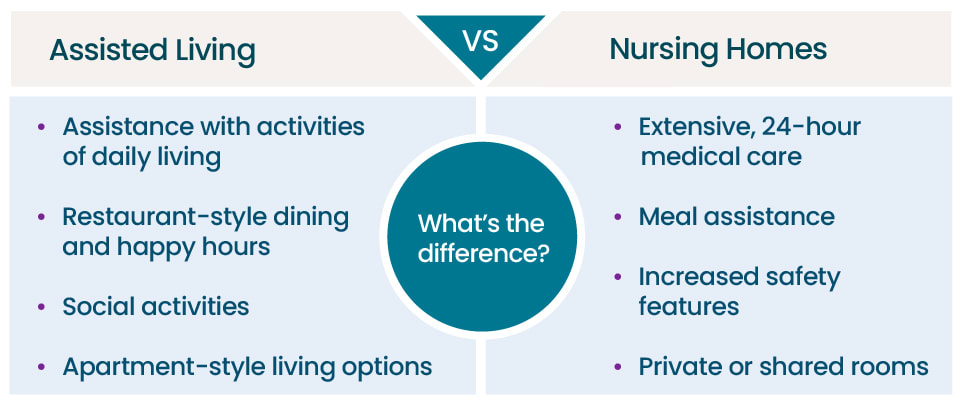
Assisted living is a type of senior housing that provides support and assistance to older adults who need help with activities of daily living (adls) such as bathing, dressing, grooming, and medication management.
Assisted living facilities are designed to provide a safe and comfortable environment for seniors who are no longer able to live independently but do not require the level of care provided by a nursing home.
More commonly known as a skilled nursing facility , a nursing home provides the highest level of care possible outside of a hospital. Many seniors move to a nursing home following a hospital stay, surgery, or procedure. Nursing homes deliver 24-hour care to seniors who have complex medical conditions and need hands-on assistance and monitoring. Residents receive skilled care and may even be confined to bed, be totally incontinent, or rely on g-tube feeding for nutrition. In many cases, residents are there short-term to recover from a hospital stay or procedure. In other cases, residents are there long-term to receive comprehensive healthcare interventions 24 hours a day.
Assisted living communities are designed to provide support and assistance to seniors who may need help with certain activities of daily living but do not require the level of medical care provided in nursing homes. Here’s a more detailed exploration of key aspects of assisted living:
costs related to assisted living and nursing homes vary by location, services offered and level of care needed. Nursing homes can cost almost twice as much as assisted living facilities because of the full-time medical care provided. In 2020, the national median cost for assisted living was $51,600 a year. In comparison, the national median daily rate for a semi-private nursing home room was $255 ($93,075 a year) and $290 for a private room ($105,850 a year). These charges generally include rent, meals, laundry, basic nurse supervision and generic non-prescription medication. Families can finance assisted living community costs through personal funds or long-term care insurance policies.
The cost differences between independent and assisted living primarily stem from the level of care and services provided in each type of community. Independent living communities are geared towards seniors who can manage their daily activities without much assistance and primarily focus on providing maintenance-free living, socialization opportunities, and access to shared amenities. As a result, independent living costs associated with independent living are typically lower than those of assisted living. In contrast, assisted living offers a higher level of care and support for seniors who require help with activities of daily living, medication management, and access to healthcare professionals when needed.
As your loved one ages, they may require more care than they can get from friends and family at home. Choosing a long-term care facility can help improve their quality of life, but the decision can be difficult to make. Assisted living facilities and nursing homes are two options that provide different levels of care. While assisted living is designed for mostly independent living, nursing homes can provide needed medical care around the clock. This guide compares assisted living facilities and nursing homes, including their pros and cons, the type of care provided at each institution and their costs.